HIGHLIGHTS †
Japan’s Education Ministry (MEXT) launches interdisciplinary research hub program to foster collaborative innovation across institutions from October 2025 (MEXT web)
Project title: Interdisciplinary Frontier Hub for Enhancing Planetary Resilience through Low-Temperature Plasma Science and Genetics (Web)
Human survival is increasingly threatened by the limits of the planetary boundaries. To address these challenges and enhance the sustainability of agriculture, forestry, and fisheries, this project aims to strengthen planetary resilience by leveraging low-temperature plasma technologies to regulate epigenetics—without relying on fossil fuels. Instead, it utilizes atmospheric resources, water, and renewable energy.
The initiative will establish a cross-disciplinary research network that integrates plasma science and genetics, creating a new academic domain that bridges these fields. This hub will contribute to food security and global sustainability by pioneering innovative approaches to biological control and environmental adaptation.
Terminology– What is Epigenetics?: 🧬 Epigenetics refers to the study of changes in gene expression that do not involve alterations to the underlying DNA sequence. These changes can be triggered by environmental factors, chemical signals, or physical stimuli, and they influence how genes are turned on or off. In agriculture and life sciences, epigenetic regulation is a promising tool for enhancing stress resistance, improving crop traits, and adapting organisms to changing environments—all without genetic modification.
事業名: 地球レジリエンス強化に向けた低温プラズマ学と遺伝学のフロンティア学際ハブ(Web)
概要: 人類の生存は、プラネタリーバウンダリー(地球の限界)によれば、ますます脅かされています。これらの課題に対応し、農林水産業の持続可能性を高めるため、本事業では化石燃料に依存せず、大気・水・再生可能エネルギーを活用し、低温プラズマ技術によるエピジェネティクス制御を通じて、地球レジリエンスの強化を目指します。
この取り組みでは、低温プラズマ学と遺伝学を融合させた新たな学術領域の創成を目指し、異分野融合型の研究ネットワークを構築します。食料安全保障や国際的課題への対応に貢献する革新的な生物制御技術や環境適応技術の開発を推進します。
実施期間: 2025年度より2034年度
用語解説: 🔬 エピジェネティクス(Epigenetics) とは、DNAの塩基配列そのものを変えることなく、遺伝子の働き方(発現)を制御する仕組みを指します。環境要因や化学的刺激によって、遺伝子のオン・オフが調整されることで、生物の性質や反応が変化します。農業や医療分野では、エピジェネティクスを活用することで、作物の耐性強化や病気の予防などに応用が期待されています。
Review has been published.
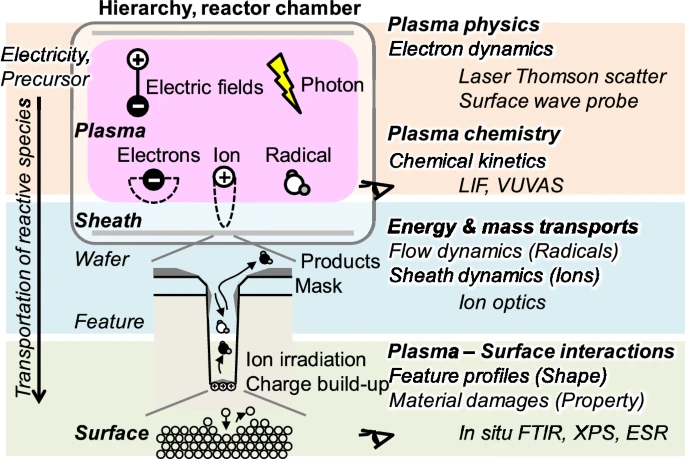
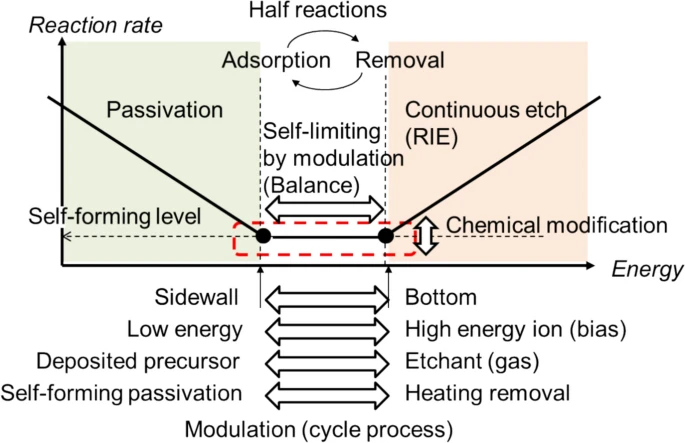
Plasma-assisted material processing (Go to publication (link)). Plasma process hierarchy comprises heterogeneous phases of plasma, sheath, and surface (Link to Fig), Mechanisms behind the cyclic atomic layer etching processes (Link to Fig.)
Grant-in-Aid for Transformative Research Areas (A) has been started from April, 2024
Project area name is "Plasma-driven seed memory operation: Frontiers in molecular dynamics in seeds driven by plasma" (Web)
24H02254 "プラズマ駆動生化学反応の学理構築:活性種の動態解析" (KAKEN) Principal investigator: Kenji Ishikawa
Plasma-based in situ functionalization based on functional nitrogen science
Functional nitrogen science is now emerged for effective utilization of reactive nitrogen species (RNS). The technologies are related to water and air plasma-based nitrogen fixation. Electron impact reactions and chemical reactions among nitrogen, oxygen, and hydrogen, can occur on non-equilibrium plasma processing. Key issues are on in situ generation of RNS at the point of use and plasma-based nitrogen cycles of ammonia and nitric acid. (link to) Ishikawa Jpn. J. Appl. Phys. 61 SA0802 (2022).
Nitrogen derivatives (Diagram): Short-lived nitrogen derivatives react to generate various RNS in situ through oxidation and hydrogenation.
Upcoming meeting †
Color: Oversea, Domestic
2026
- July 6, 2026
- 会合
- July 7-11, 2026
- (not attend) XXVII ESCAMPIG (Europhysics Conference on Atomic and Molecular Physics of Ionized Gases) to be held at Madeira, Portugal.
- July 8, 2026
- 筑波大学
- July 9, 2026
- 会合
- July 10, 2026
- 会合
- July 10, 2026
- 岐阜農林高等学校見学
- July 11, 2026
- 第56回サタデーモーニングプラズマ講座
- July 13, 2026
- 自然科学研究機構 Excells訪問
- July 16, 2026
- 最先端半導体研究戦略室
- July 16, 2026
- コーンズテクノロジー
- July 17, 2026
- 最先端半導体レクチャー マイクロンテクノロジー 世話人:石川健治
- July 18, 2026
- 会合
- July 22, 2026
- アデレード大学
- July 23, 2026
- 相談会
- July 24, 2026
- UPWARDS Graduate Program -Micron-NU Tech Day- at Higashi-Hiroshima
- July 27–August 7, 2026
- UPWARDS Summer Intensive Program at Nagoya University (Web)
- July 28, 2026
- Visit of Dr Rob Stroeks
- July 28, 2026
- 会議
- July 29-30, 2026
- UPWARDS cLPS担当
- July 31, 2026
- FUJI teracoya 於:Ideastoa, 名古屋大学
- August 1, 2026
- TOKAI SEMICON DAY 東海セミコンデー (Web)
- August 7, 2026
- オープンキャンパス
- August 12-14, 2026
- (not attend) 6th International Symposium on Plasma Bioscience (ISPB 2026),to be held at Kwangwoon University, Seoul, Republic of Korea (Web)
- August 18-21, 2026
- 打ち合わせ
- August 21, 2026
- 相談会
- August 25-26, 2026
- 共共拠点成果報告会
- August 25-28, 2026
- (not attend) Summer School and International Symposium on the Physics of Ionized Gases (SPIG 2026) to be held at Belgrade, Serbia. (Web)
- August 27-29, 2026
- (not attend) プラズマエレクトロニクス分科会インキュベーションホール 於:代々木、東京
- August 31-September 3, 2026
- (not attend) 20th International Conference on Plasma Surface Engineering (PSE 2026), to be hld at Erfurt, Germany
- September 3, 2026
- (Closed) R052 DXプラズマ研究会 2026年度第3回研究会 於:東京
- September 4-6, 2026
- (not attend) 日本植物学会 於:東京理科大学、野田キャンパス (Web)
- September 4-6, 2026
- (not attend) 日本植物バイオテクノロジー学会 於:とりぎん文化会館、鳥取 (Web)
- September 3, 2026
- DPS 委員会
- September 5-13, 2026
- (not attend) 18th International Conference on Physics of Advanced Materials (ICPAM-18) and the 9th Autumn School on Physics of Advanced Materials (PAMS-9) to be held at the FZU-Institute of Physics of the Czech Academy of Sciences in Prague, Czech Republic.
- September 8-11, 2026
- 応物秋 2026年(令和8年)応用物理学会 秋季学術講演会 to be held at Hokkaido University, Japan. シンポジウム Dr Ishikawa will have an invited talk (in Japanese) 10p-E310-2 "半導体プロセスにおける低温プラズマの技術課題と今後の流れ" on symposium T-17 低温プラズマによる半導体加工の未来 on afternoon, Semptember 10. enSETシンポジウム (9/11 9:00-12:30)
- September 11-12, 2026
- 会合
- September 14-17, 2026
- (not attend) 58th International Conference on Solid State Devices and Materials (SSDM2026) to be held at Dejima Messe Nagasaki, Nagasaki, Japan. (Web)
- September 15-16, 2026
- 表面技術協会 於:鈴鹿高専 (Web) Dr Ishikawa will have an invited talk.
- September 16-18, 2026
- (not attend) International Symposium of the Vacuum Society of the Philippines (ISVSP) & 19th International Conference on Plasma Science and Application (ICPSA), to be held at Batangas State University, philippines (Web)
- September 24-25, 2026
- 学変全体会議
- September 24, 2026
- 公聴会、相談会
- September 25, 2026
- 修了式
- September 26-27, 2026
- 研究室旅行
- October 5-6, 2026
- Adelaide University
- October 5, 2026
- 講義 誘電体工学(1)
- October 6, 2026
- 講義 電磁気学(1)
- October 9, 2026
- 最先端半導体レクチャー
- October 12, 2026
- 講義 誘電体工学(2)
- October 13, 2026
- 講義 電磁気学(2)
- October 11-16, 2026
- AAPPS-DPP AAPPS-DPP2024 Annual Conference to be held at Exhibition and Convention Center in Busan port (BPEX), Korea (Web) Dr Ishikawa will have an invited talk on special session of KFE IPT-CLPS joint workshop on October 11 and 13.
- October 16, 2026
- 日本表面真空学会真空技術部会 2026 年 10 月研究例会 「真空システム・材料表面のクリーン化技術:表面清浄化とダスト制御」 13:15~16:35 会 場 機械振興会館 地下3階 研修―1 「プラズマ・ラジカルを利用した原子層表面プロセス」
- October 17, 2026
- ホームカミングデー
- October 19, 2026
- 講義 誘電体工学(3)
- October 20, 2026
- 講義 電磁気学(3)
- October 19-23, 2026
- (not attend) 16th International Conference on Atomically Controlled Surfaces, Interfaces and Nanostructures (ACSIN-16) and 34th International Colloquium on Scanning Probe Microscopy (ICSPM34), to be held at Awaji, Japan. (Web)
- October 23, 2026
- 最先端半導体レクチャー 担当
- October
24 25, 2026
- 熱帯農業学会シンポジウム 於:名古屋大学
- October 25–29, 2026
- (not attend) 250th ECS Meeting to be held at Calgary, Canada. (Web)
- October 26, 2026
- 講義 誘電体工学(4)
- October 27, 2026
- 講義 電磁気学(4)
- October 28-30, 2026
- 2nd International Asia-Pacific Atomic Layer Deposition Conference (AP-ALD), to be held at Jeju, Korea
- November 2, 2026
- 講義 誘電体工学(5)
- November 3, 2026
- 講義 電磁気学(5)演習
- November 2-6, 2026
- GEC 79th Gaseous Electronics Conference (GEC 26) to be held at Chicago, USA. (Web) Dr Ishikawa will have an invited talk of "Leading-edge semiconductor plasma-processing via energy-efficient, environmentally benign, and evolutionary techniques". Nguyen Tran Trung will have an invited talk of "Photo-electron photo-ion coincidence study of valence fragmentation of hydrofluoro-carbon molecules". Takayoshi Tsutsumi will have an invited talk of "Aspect-ratio dependent mass spectrometry for high-aspect-ratio-feature plasma etching".
- November 6, 2026
- 最先端半導体レクチャー
- November 9, 2026
- 講義 誘電体工学(6)
- November 10, 2026
- 講義 電磁気学(6)演習
- November 8-13, 2026
- AVS AVS 73rd International Symposium & Exhibition, to be held at Pittsburgh, Pennsylvania, USA. (Web) Dr Ishikawa will chair the plasma science and technology division.
- November 8-13, 2026
- KISM (not attend) 5th Krean International Semiconductor Conference & Exhibition on manufacturing technology (KISM 2026) to be held at Paradise hotel, Busan, Korea
- November 8-13, 2026
- (not attend) iPlasmaNano to be held at Florianópolis, Brazil. (Web)
- November 10-13, 2026
- MNC (not attend) 第39回マイクロプロセス・ナノテクノロジー国際会議(MNC 2026) 於:ホテルニューオータニ博多(福岡) (Web)
- November 16, 2026
- 講義 誘電体工学(7)
- November 17, 2026
- 講義 電磁気学(7)
- November 19-20, 2026
- DPS 47th DPS to be held at Tokyo International Exchange Center, Tokyo Academic Park, Odaiba Tokyo, Japan. (Web)
- November 23, 2026
- 講義 誘電体工学(8)
- November 24, 2026
- 講義 電磁気学(8)演習
- November 24, 2026
- (Closed) R052 DXプラズマ研究会 2026年度第4回研究会 於:東京
- November 30 - December 2, 2026
- ICRP 12th International Conference on Reactive Plasmas (ICRP-12) to be held at Kanazawa, Japan. (Web)
- November 30, 2026
- 講義 誘電体工学(9)
- December 1, 2026
- 講義 電磁気学(9)演習
- December 1-4, 2026
- 第49回日本分子生物学会年会 第99回日本生化学会大会 パシフィコ横浜 (Web)
- December 3, 2026
- 学変総括班会議 於:金沢
- December 7-9, 2026
- MRS-J 第36回日本MRS年次大会 於:横浜・産業貿易センタービル (Web)
- December 7, 2026
- 講義 誘電体工学(10)
- December 8, 2026
- 講義 電磁気学(10)
- December 8-11, 2026
- プラズマ核融合学会 北九州国際会議場 (Web)
- December 9-11, 2026
- セミコンジャパン 2026 東京ビッグサイト
- December 14, 2026
- 講義 誘電体工学(11)
- December 15, 2026
- 講義 電磁気学(11)
- December 14-18, 2026
- The Netherlands and Japan semiconductor talent programme
- November 18, 2026
- 最先端半導体レクチャー 担当
- December 18-20, 2026
- Japan-Taiwan Workshop on Plasma Leading Science and Technology (JTPL2026), to be held at Taiwan.
- December 19-20, 2026
- (Closed) プラズマ種子科学第三回若手研究会 於:福島市土湯温泉町 YUMORI 温泉ホステル
- December 21, 2026
- 講義 誘電体工学(12)
- December 22, 2026
- 講義 電磁気学(12)
2027
- January 11, 2026
- 講義 誘電体工学(13)
- January 12, 2026
- 講義 電磁気学(13)
- January 18, 2026
- 講義 誘電体工学(14)
- January 19, 2026
- 講義 電磁気学(14)演習
- January 19-20, 2027
- (Closed) R052 DXプラズマ研究会 2026年度第5回研究会 於:愛媛
- January 25, 2026
- 講義 誘電体工学(15)
- January 26, 2026
- 講義 電磁気学(15)
- February 1, 2026
- 講義 誘電体工学 試験
- February 2, 2026
- 講義 電磁気学 試験
- March 2-6, 2027
- ISPlasma ISPlasma 2027, to be held at Nagoya University, Japan. Dr Ishikawa will chair this symposium.
- March 8-12, 2027
- 4th International Workshop on Plasma Cryo Etching Processes (PlaCEP), 2nd German-Japanese Plasma Processing Workshop, and International Workshop on Atomic Layer Processes, to be held at Bankoku Shinryokan, Okinawa, Japan. https://www.insd.osaka-u.ac.jp/ppl/Conferences/PPW-2/
- March 16-19, 2027
- 第74回応用物理学会春季学術講演会 上智大学 四谷キャンパス
- April 19-23, 2027
- 1st International Conference on Low Temperature Plasmas (ICLTP 2027), to be held in Beijing, China. (Web)
- April 21-25, 2027
- IWOPA6 6th International Workshop on Plasma Agriculture (IWOPA) to be held at Ishigakijima, Okinawa, Japan.
- June 20-23, 2027
- AVS 27th International Conference on Atomic layer deposition and 14th International atomic layer etching workshop (ALE 2027) to be held at Dresden, Germany. (Web) Deadline: February 4, 2027.
- September 13-17, 2027
- 第88回応用物理学会秋季学術講演会 熊本城ホール
- October , 2027
- GEC 80th Gaseous Electric Conference (GEC) to be held at Lisbone, Portugal.
- October 24-31, 2027
- AVS AVS 74th International Symposium & Exhibition, to be held at Portland OR, United States.
- November 15-19, 2027
- 48th DPS to be held at Centennial hall, Hakata, Kyshu, Japan.
- November 23-26, 2027
- 第50回日本分子生物学会年会 福岡国際会議場・マリンメッセ福岡
2028
- March 15-18, 2028
- 第75回応用物理学会春季学術講演会 横浜国立大学
- September 12-15, 2027
- 第89回応用物理学会秋季学術講演会 関西学院大学
- September , 2028
- GEC 81st Gaseous Electric Conference (GEC) to be held at Montreal, Canada.
- November , 2028
- AVS AVS 75th International Symposium & Exhibition, to be held at USA.
- November , 2028
- 49th DPS to be held, Japan.
meeting2026, meeting2025, meeting2024, meeting2023, meeting2022, meeting2021, meeting2020, meeting2019, meeting2018, meeting2017, meeting2016, meeting2015, meeting2014, meeting2013, meeting2012, meeting2011
JSPF calendar, MRS calendar, APS calendar, conferences calendar
HIGHLIGHTS (II)
Metabolomic profiles display a novel mechanism on cell death that is induced specifically by incubation in the non-thermal plasma treated solutions
The plasma-activated lactated solution (PAL) exhibits antitumor effects in glioblastoma U251SP cells. The PAL-treated U251SP cells exhibited changes in intracellular metabolites that were reductive in the redox state.
Non-thermal plasma–activated lactate solution kills U251SP glioblastoma cells in an innate reductive manner with altered metabolism
Kenji Ishikawa, Yugo Hosoi et al. Archives of Biochemistry and Biophysics 688, 108414 (pp. 1-9) (July 30, 2020). link
Nonthermal plasma-activated medium (PAM) modified metabolomic profiles in glycolysis of U251SP glioblastoma
Naoyoyuki Kurake, Kenji Ishikawa et al. Archives of Biochemistry and Biophysics 662, pp.83-92 (February 15, 2019). link
Real-time in situ ESR
Our paper was published on-line in the Applied Physics Letters (IF 2011 = 3.844) on July 2 issue of 2012.
Real-time In Situ Electron Spin Resonance Measurements on Fungal Spores of Penicillium digitatum during Exposure of Oxygen Plasmas
Kenji Ishikawa et al. Appl. Phys. Lett. 101, 013704 (2012). link, arXiv
Real-time in situ ESR
Our paper was published in the Journal of Physical Chemistry Letters (I.F. 2011 = 6.213)
link
Synergistic Formation of Radicals by Irradiation with both Vacuum Ultraviolet and Atomic Hydrogen: a Real-time in situ Electron Spin Resonance Study
We report on the surface modification of polytetrafluoroethylene (PTFE) as an example of soft- and bio-materials that occur under plasma discharge by kinetics analysis of radical formation using in situ real-time electron spin resonance (ESR) measurements. During irradiation with hydrogen plasma, simultaneous measurements of the gas-phase ESR signals of atomic hydrogen and the carbon dangling bond (C-DB) on PTFE were performed. Dynamic changes of the C-DB density were observed in real time, where the rate of density change was accelerated during initial irradiation and then became constant over time. It is noteworthy that C-DBs were formed synergistically by irradiation with both vacuum ultraviolet (VUV) and atomic hydrogen. The in situ real-time ESR technique is useful to elucidate synergistic roles during plasma surface modification.
Kenji Ishikawa et al. J. Phys. Chem. Lett. 2, 1278 (2011). link
This paper won the 11th Plasma Electronics Award awarded by the Plasma Electronics division of the Japanese Society of Applied Physics on March 28, 2013.
Copyright Kenji Ishikawa (c) 2009-2025 Center for Low-temperature plasma sciences, Nagoya University.
![[PukiWiki]](image/pukiwiki.png "[PukiWiki]")